
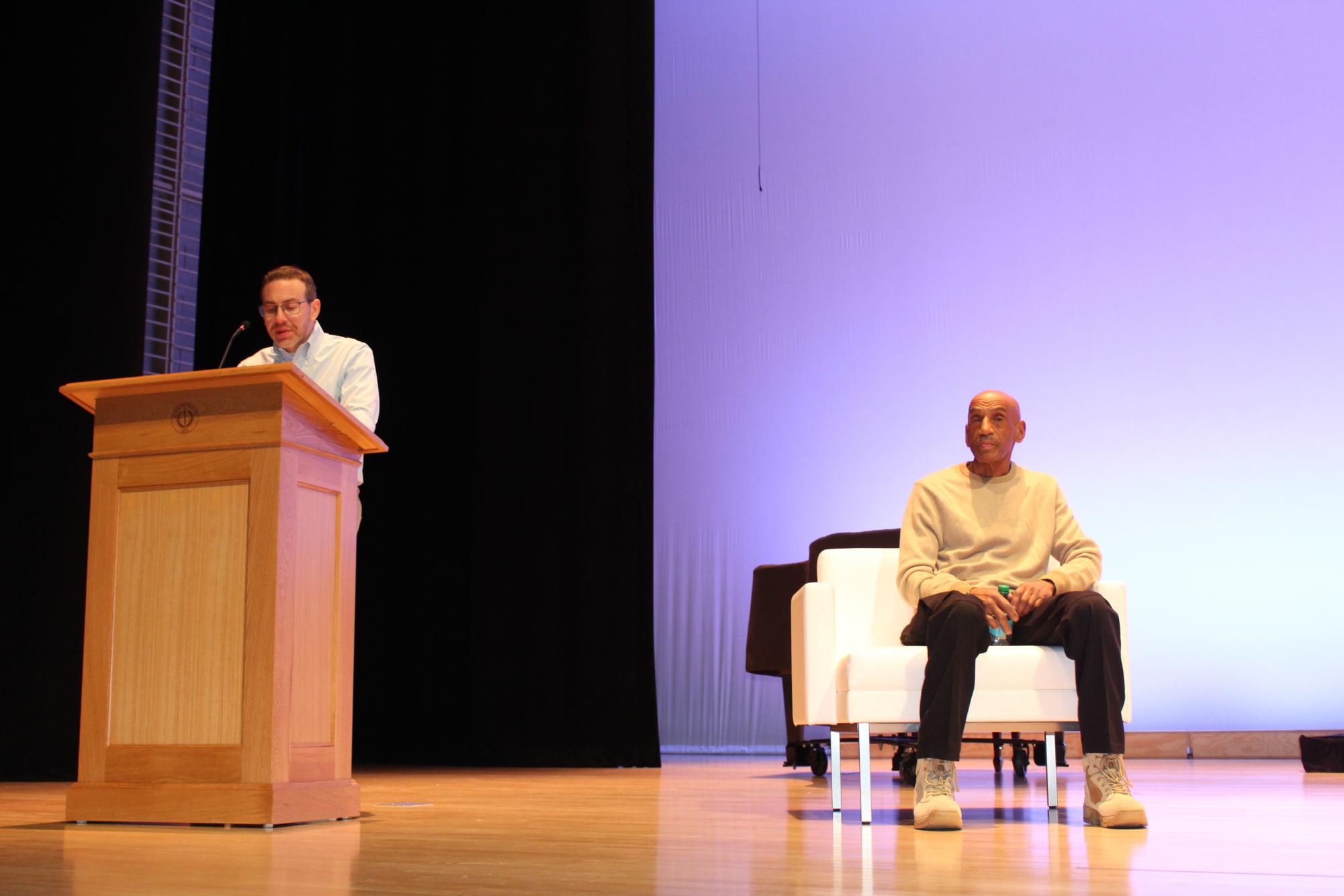
“People on the jury are going to have thoughts about what you did. They believe you must’ve done something to get there. But sometimes you really haven’t.” These powerful words were just one of the insights Greg Mingo shared with Upper School students in Diller Hall during his visit month.
Greg Mingo, a New York native, spent 40 years in prison for a crime he did not commit before receiving clemency in 2021. On Friday, December 5th, 2025, Mr. Mingo spoke to Hackley students in Diller Hall about his experience with wrongful conviction and the law. Mr. Mingo centered much of his Diller Hall talk on the implications of perception for conviction in the American legal system.
“Race and perception, they are tied together. If someone has a certain perception of you, and you are sitting in front of them, regardless of what is true, they are going to perceive you that certain way,” Mr. Mingo said.
Perception is found throughout many aspects of the legal system: the jury, the judge, and even attorneys. For suspects in a trial, there is no escaping the impact of perception.
“We all have this image of who we think we are. Then there is how we are seen; we don’t want to be seen poorly. Then there is who we truly are, and how do you figure that out? It’s a lot of self-reflection,” said Mr. Mingo.
Mr. Mingo’s advice about perception and self-reflection inspired students to rethink how they perceive themselves and others.
“His speech was very inspiring, specifically when he talked about how perception is a major factor in the legal system,” senior Leila Dillow said.
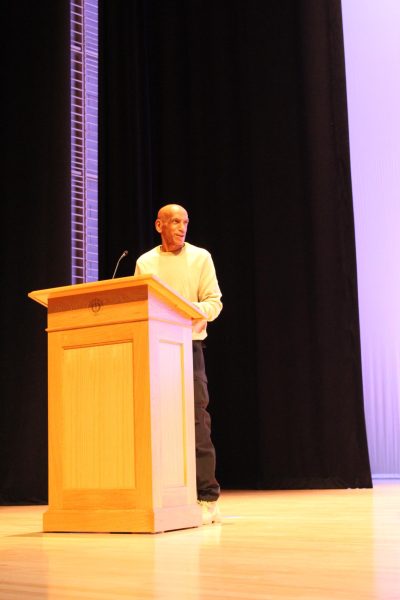
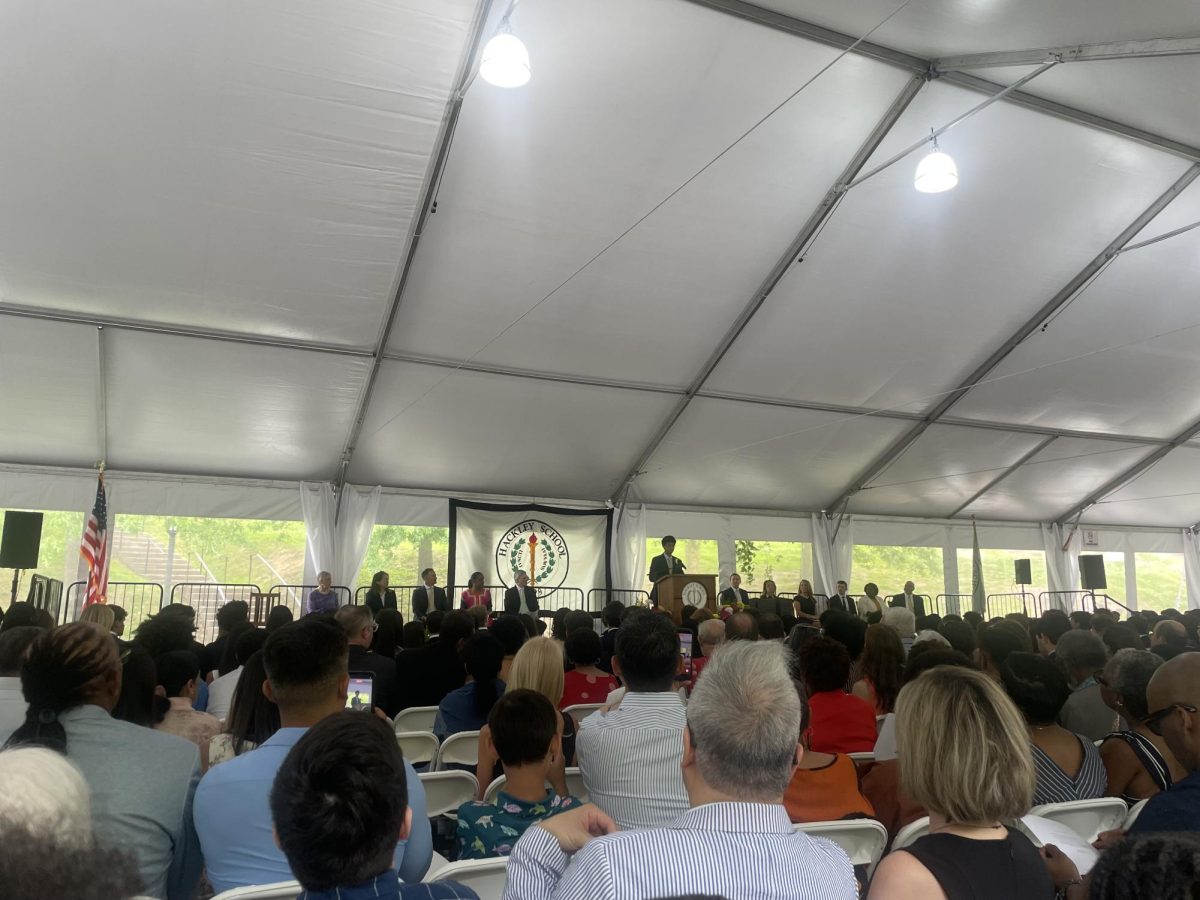
Greg Mingo spoke to the entire Upper School student body about his experience being convicted of charges he didn’t commit in the American Legal system. Mr. Mingo captivated the attention of the audience, speaking uninterrupted for about 40 minutes.
Mr. Mingo was connected to Hackley through its partnership with the Innocence Project, a legal organization that works to exonerate those wrongfully convicted, advocate for reforms, and educate the public. For the past five years, history teacher Michael Bass has invited exonerees to Hackley to meet with his American Law students and engage with the wider Upper School community.
Mr. Bass has been working with the Innocence Project for almost 20 years, going back to his teaching at a prior school. He appreciates that they reliably identify powerful speakers to help educate our community.
“They introduce me to exonerees like Mr. Mingo, and because the Innocence Project vouches for these people, it makes me feel confident that they’re going to be a good speaker,” said Mr. Bass.
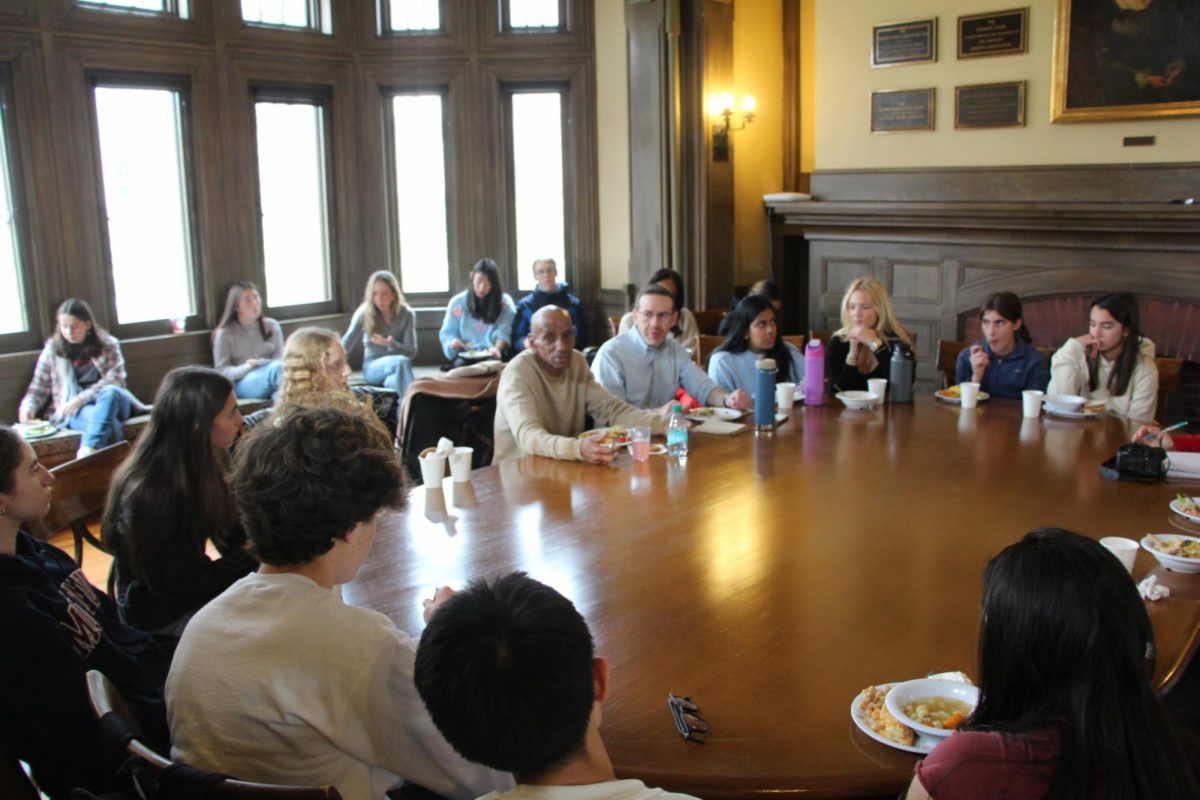
The lessons Mr. Mingo taught extended beyond Diller Hall. He also spoke to students in the American Law class and at a Roundtable in the Lindsay room. In these conversations, he emphasized the importance of belief, especially when it is easy to give up.
“I had that fear of are you going to die in here. So then I had to reevaluate my idea of success to be getting out… Either you fight for your life, or you give up. Those are the only two options, and I told myself I would not give up,” said Mr. Mingo.
These words of resistance and encouragement hold genuine power because of the circumstances of Mr. Mingo’s sentence. His faith and determination, even though he was wrongfully convicted, have been an inspiration for Hackley students who hear him speak.
“Many of us in my law class were impressed with his level of forgiveness and ability to speak about his experience,” said Emelia Pieri, a sophomore.
Mr. Mingo spoke about his experience serving 40 years in jail for a crime he didn’t commit. The length of time he served for this crime caught the attention of many people, including Mr. Bass.
“[The Innocence Project] gives us a lot of choice. They will send me the names of four or five exonerees and links to them. Usually, almost any of the people she suggests will be great speakers, but sometimes something in their story just hits me. With Mr. Mingo, it was that he had been incarcerated for forty years, I had never seen someone who spent that long in prison for something they didn’t do,” said Mr. Bass.
Mr. Bass added that programming like this is made possible by The Jeffrey A. Libert ’73 Endowment, which provides support for projects and activities related to deepening an understanding of the intersection of race, law, and the U.S. Constitution.
In addition to being a source of inspiration, Mr. Mingo’s presentation provided students with extensive education about the American Justice System. He shared his views on aging in prison and how education can be a pathway for prisoners upon release.
“Education is like a magic carpet ride to take you wherever you want to go in life. Law was my way out, my only way out. And I realized that it controlled so many aspects of my life.”
Since being granted clemency from prison, Mr. Mingo has begun working as the senior advisor for the Second Look Project in NY, and he is the Westchester Community Leader for Releasing Aging People in Prison, helping others get themselves released from prison. These programs emphasize the importance of legal education for people aging or wrongfully convicted.
“Education is key because people develop skill sets, so when they get home, they have something to work with. Education is the measure of how someone has grown,” Mr. Mingo said.
These opportunities provide second chances for many people, but, more importantly, they instill the belief that is key to success when trying to get out of prison.
“It’s important not to think you can’t do it. Then you won’t. You have to believe,” Mr. Mingo said.