


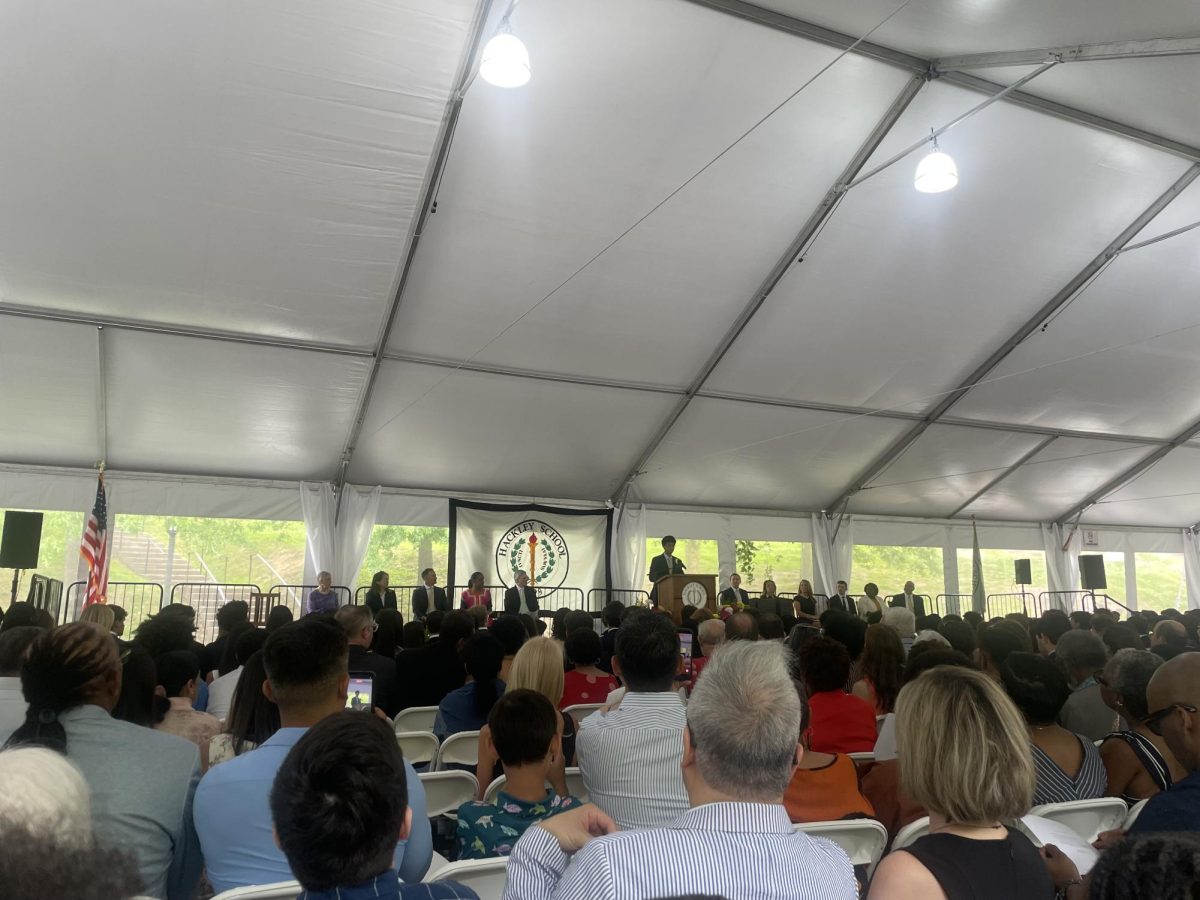

















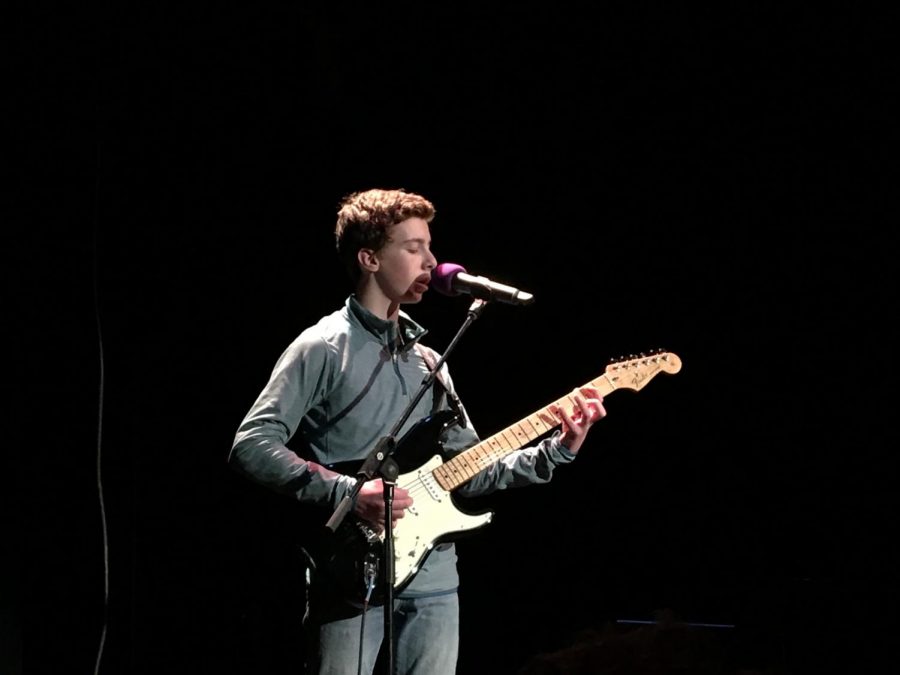
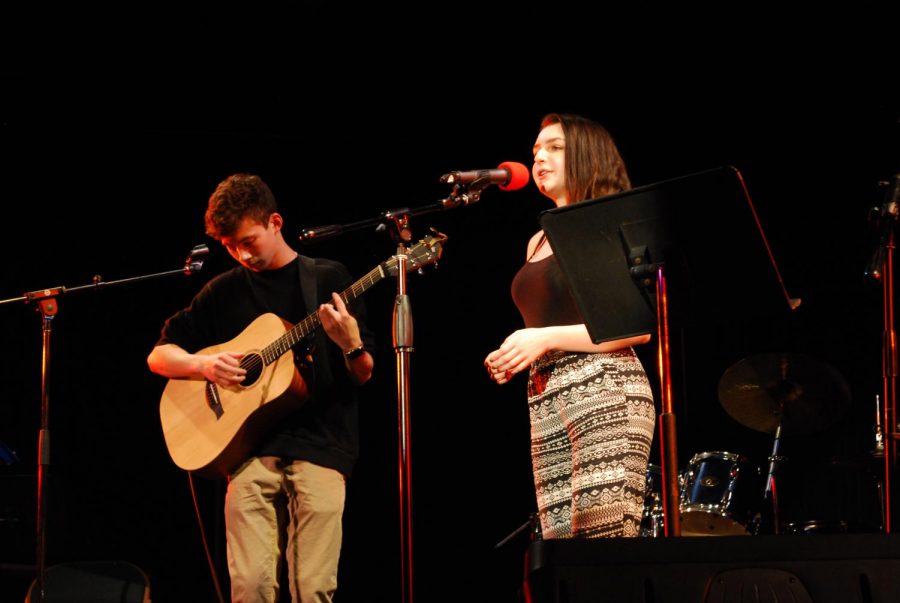




Under the lights of the outdoor amphitheater, Spring Coffeehouse performers displayed their remarkable talents to a roaring crowd of Hackley students, parents, and teachers alike. But behind the vibrant lights, impassioned singing, and lively cheers, a dedicated crew of organizers, technicians, and volunteers works to make the night run seamlessly. From auditions to lighting rigs to live audio mixing, the effort behind Coffeehouse runs far deeper than most in the audience ever realize.
Long before the show, the process begins with Dylan Chalfy, managing assistant for performing arts, who coordinates the event alongside the HPA. He meets with them at the end of each year to plan the schedule for all three coffeehouses and sets audition dates well in advance, giving students enough time to prepare and refine their performances in the weeks leading up to Coffeehouse.
“Usually, [students] just come here to my office, and more often than not, I'm playing a karaoke track on my computer that they'll sing along to, or if they are so inclined, they can accompany themselves on the piano or guitar,” Mr. Chalfy said.
Mr. Chalfy evaluates not just vocal ability, but song choice and appropriateness. Students usually choose songs that are special to them.
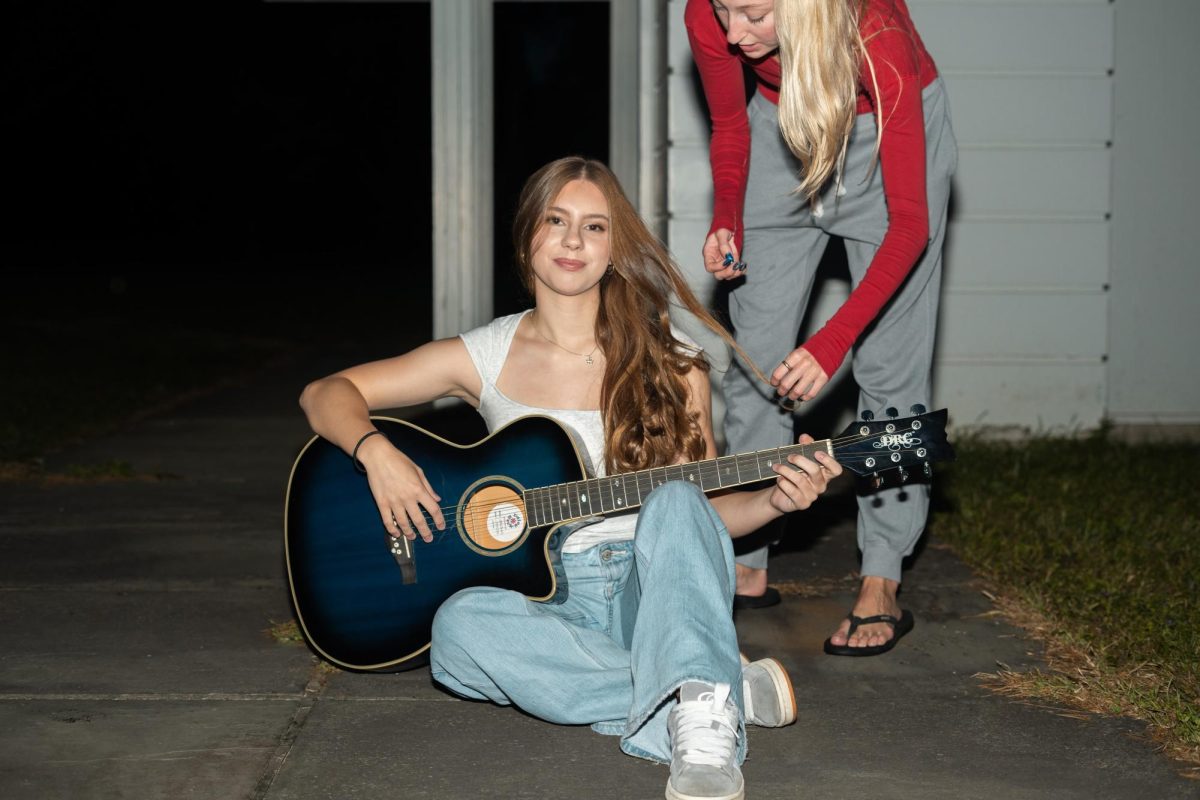
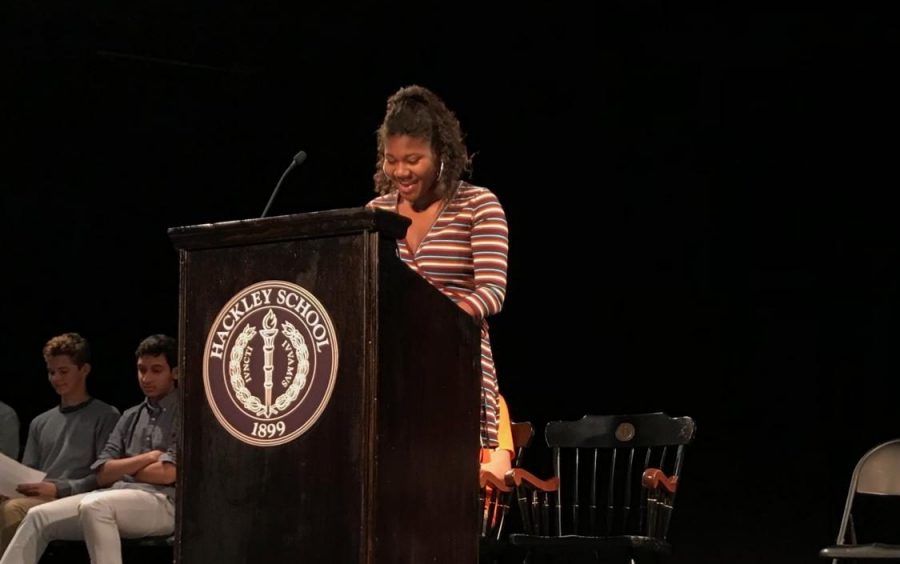
Singer and house band guitarist Farah Goods is a regular performer at Coffeehouse, helping with the backing vocals and guitar in other performances. She performed “Thinking Of You,” by Katy Perry, this spring.
“It's one of my favorite songs, and I know a lot of other people like it,” Farah said. “It really resonated with me before I sang it. To the extent that it almost made me upset about how sad that song makes me after I sang it.”
Once performers are selected, preparation shifts from auditions to collaboration. For many performers, Coffeehouse means working alongside the student house band–a rotating group of musicians who back singers throughout the night. During the week leading up to Coffeehouse, the band rehearses from 5 p.m. to 8 p.m. nightly.
“I kind of just got roped into it. The next thing I know, I had a spreadsheet shared with me, and it was all the house band songs,” house band guitarist Molly Perla said. “I typically learn the songs a week before, and I get them down decently, then wait, and then we really refine everything with the entire band.”
While performers rehearse, a separate team is busy building the show from the ground up. Typically, Coffeehouse takes place in the newly built Diller Hall auditorium. Diller Hall runs on a fully digital, networked AV system. However, this spring’s Coffeehouse was in the outside amphitheater.
“The biggest difference between doing something here and doing something in the buildings that we had before is that we were essentially analog before,” Mr. Chalfy said. “It's been challenging, though, because the system that we have is something that you don't typically find even in the biggest, finest theaters. It's something that's somewhat esoteric, and it's used for really big spaces, typically far bigger than ours. But Hackley was really invested in the idea of having state-of-the-art equipment and a state-of-the-art space to really promote the arts at Hackley. So we have this amazing system here, but it also means that it's far more technically intensive.”
However, this year's Spring Coffeehouse brought a whole new challenge: it was held outdoors in the school's amphitheater. Mr. Chalfy and theatre production manager Sarah French had to work with analog equipment when setting up.
“M. French is enthusiastic about it being outside,” Mr. Chalfy said. “The problem is lighting it outside isn't the easiest thing in the world. We don't have a lot of equipment to take outside, and the equipment that we do have is limited in terms of what it can do. All of my lighting fixtures, lighting board, control, everything like that is placed inside in the theaters. It can't just pop outside. I am actually pulling out all of the old lights from Zetkov, which are kind of DJ lights.”
While the technical setup restricted what could be done with lighting, student designers and faculty members worked to make the amphitheater visually engaging within those constraints.
“The fun thing is we've had student lighting designers for the last couple Coffeehouses, and they get to play with the colors and pick and figure out what they want to do,” M. French said. “When we're outside, we sort of have to say, ‘All right. This is the color for the evening,’ because we don't have a lighting board we can take out there and hook up.”
Backstage, the show was run by student stage manager Cara Minello, a senior who has held the role for all four years of her upper school career and is now training her successors. Freshmen Sophia Frasco and Annabelle Romano are stepping into her role.
During soundcheck, Sophia and the team go through every performer, logging how many microphones they need, whether they're working with the house band, and where they want to be positioned. Acoustic instruments get an extra dedicated mic, and everything is tracked on a running sheet used throughout the night. Sophia, who takes a technical theater studies class and also performs, said that running the technical side has helped her grow as a leader.
“I've done work with lights, sound, and set, and I also perform, so it's a nice mix of both. It's given me time to be able to step into a leadership role and take command of stuff. It's really helped with the management side. Also, as a performer, it gives me a lot of respect to [managers] who do that as one of their main things,” Sophia said.
The process behind setting up Coffeehouse allows for performers and managers alike to grow and meet new people.
“You kind of create bonds with people that you just didn't think you would,” Molly said. “I've met freshmen that I didn't know existed, and seniors that I hadn't spoken to before.”
Getting to know the community involved in Coffeehouse helped Molly become more comfortable as a performer.
“From the first time I ever performed, which was last year, I almost threw up before. I was so scared. Now I go on, and I'm actually able to enjoy it and have fun with it rather than being so scared I’ll mess up,” Molly said. “And I get better at guitar every single time.”
What makes Coffeehouse continue, year after year, is all the behind-the-scenes work put into making Coffeehouse as engaging as possible.
“All the performers are really great, and it's a great opportunity to show off those who don't take specific performing arts classes,” Sophia said.
“I like to make my performances really interactive and high energy for the people I'm performing for,” Farah said, “When that energy is reciprocated, it just makes my day.”
