




























While most students at Hackley only know the Board of Magistrates as the place you are sent when you do something wrong, there is a lot more to the Board than just punishment.
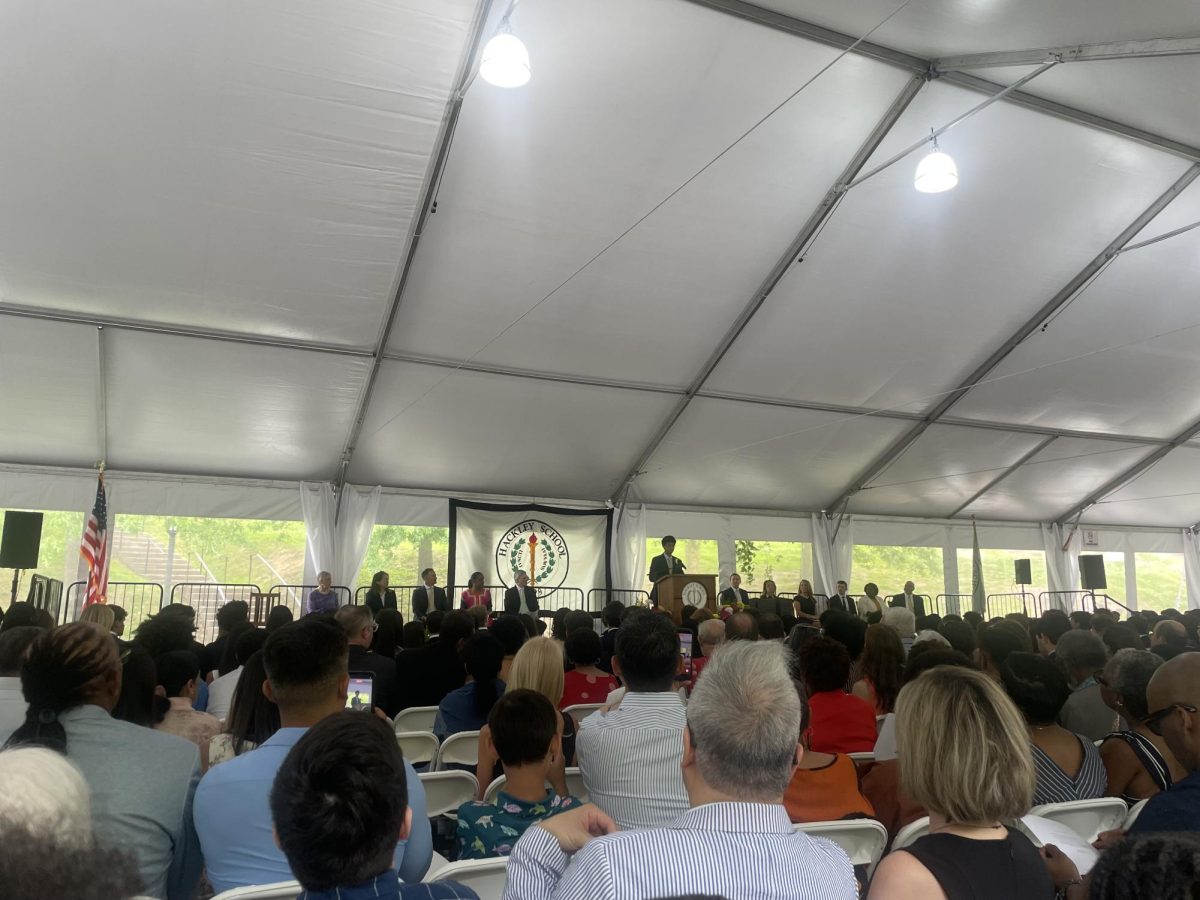
The Board of Magistrates is made up of nine seniors, five juniors, and three sophomores. In addition to student members, the Board also has 11 faculty members: Ms. Crepeau, Mr. Dioguardi, Ms. Randazzo, Mr. Gruenberg, Mr. McLay, Mr. Wright, Ms. DeMarchena, Mr. Loomis, Mr. Sykes, Ms. Casper, and Mr. Teacher.
Assistant Head of Upper School, Chris Arnold, explained that a common misconception about the role of students on the Board is that they are meant to be fact-finding.
“Their job is not to decide whether or not somebody is lying or to decide whether or not somebody should be in trouble. Their job is to sort of understand what happened and to listen to a student talk about it,” said Mr. Arnold.
The facts of the case are established between the student and their dean. The dean, along with the help of the student, is the one in charge of presenting all the information they know to the Board.
The way members of the Board become involved in cases is through an email from Mr. Arnold. Mr. Arnold reaches out to the board members when there is a case, and then both the faculty and students will answer based on their availability or if they have a relationship with the student appearing before the board.
The Board provides an opportunity for students and faculty to work together. Junior Gemma Lasky chose to join the Board because she wanted to be part of the nuanced discussions.
“It is rare to have the chance to work with other students alongside teachers and have an impactful seat at that table,” she said.
Students can be sent to appear in front of the Board for a variety of reasons, but the most common reason is an academic integrity issue. This ranges from being caught copying someone’s homework in the hallway to using artificial intelligence to write your essay.
Depending on the student’s offense, a range of disciplinary actions can be taken. The K-12 Handbook divides the consequences into four different categories: detention, disciplinary warning, disciplinary probation, and suspension. If there seems to be a misunderstanding with a student (especially an underclassman) or the offense wasn’t drastic, then a student might be sent off with just a warning (not a disciplinary warning).
Detention is the lowest level of punishment. Depending on the scenario, a student may receive detention during the school day, on Friday, or on Saturday for three hours. During detention, a student may be asked to write a reflection on what they did wrong and how they will make sure it doesn’t happen again.
A disciplinary warning, in comparison, is for a more serious offense that is deemed unworthy of formal disciplinary probation. What makes it more serious is that it results in a formal mark on your record, which is visible to colleges. If a student with a disciplinary warning commits another offense, then that student will face more serious consequences like suspension, non-renewal of re-enrollment, required withdrawal, or dismissal.
Disciplinary Probation is a serious, formal warning to a student and their guardians of the school’s expectations. The goal is to help modify a student’s behavior during this period, so that they understand what they did wrong and improve. This may result in suspension or expulsion. Once a student receives a disciplinary probation, there is a list of things students are no longer eligible for, including: class day honors/awards, different leadership positions, being members of sports teams, and trips.
Depending on a student’s offense, their consequence may land somewhere in between these four categories. Also, students with prior issues are more likely to receive harsher punishments the second time around. The categories are put in place as a mere framework for students so that they can understand the severity of their actions.
During the 2024-2025 school year, there were around 20 cases that went to the Board of Magistrates, which is something most Upper School students wouldn’t know. The majority of students, especially underclassmen, don’t know much about the Board. However, it is important that students are aware of the Board and the consequences that come with the decisions they make.
The Board of Magistrates is a confidential thing in the sense that it is supposed to protect the students who have gone to the Board’s identities. “It’s not meant to be secret that we have it and that we do it,” said Mr. Arnold. “But it is nobody’s business if a student gets in trouble. We believe in that very strongly.”
Even though the Board cases are confidential, students should still receive more information about what the Board is and how it works. Currently, Upper School students not on the Board get one email a year asking them if they are interested in applying or to nominate a peer they think would do a good job on the Board. Most students don’t know more than that, and many probably miss that email altogether.
To change this, Mr. Arnold and the entire board of magistrates hope to hold assemblies in Diller Hall to explain what the board is so that all students are aware. Events like this will help create more awareness about the board of magistrates and the consequences of your actions.
