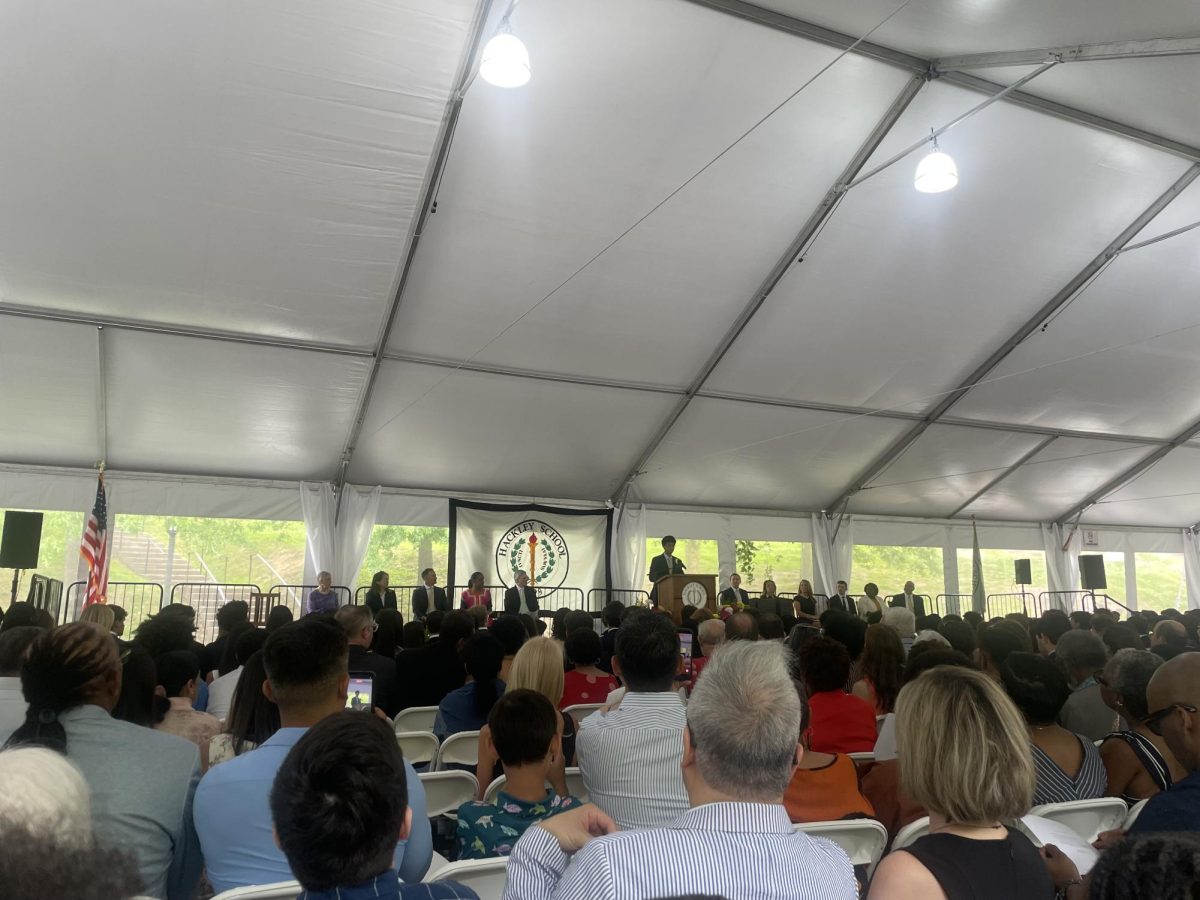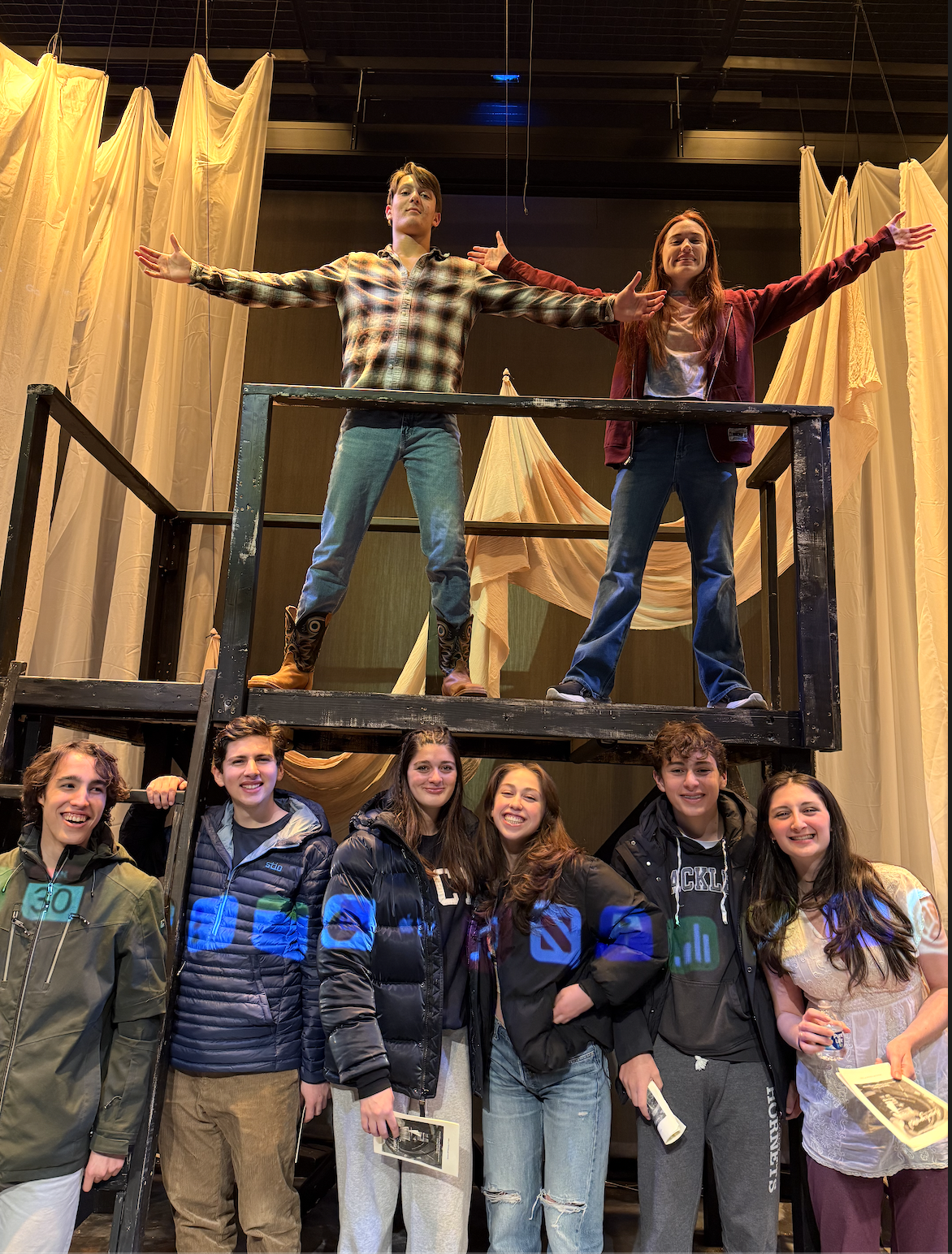
The lights dimmed, and the curtain rose in Hackley’s black box theater. A packed house cheered for Hackley’s production of Anon(ymous) (a modern reimagining of Homer’s The Odyssey). Audiences watched as Hackley students retold a classic story while tackling new issues like immigration and belonging. From just one performance, the level of preparation put into memorizing lines, creating sets, and getting into character is clear. However, the real story lies in the dedicated cast behind the show.
Getting in Character:
Before all the dress rehearsals and line readings, actors across the program learn about the play and figure out which character makes the most sense for them.
Sophomore Kubrick Croce took on the role of Mr. Zyclo. He brought his usual emotion, personality, and humor to embody this self-important cannibal butcher who enjoys fine wine. For Kubrick, though, becoming this character started almost a decade prior.
It began on a trip to Arthur Avenue. Kubrick trailed along with his grandmother through a butcher shop, feeling uneasy. He stared at the bright white lights, the pink-striped walls, and the carcasses hanging in the back. Then the butcher leaned down and handed him a lollipop.
He said in a deep booming voice, “What’s the matter with the little kid?”
This memory stayed dormant for years until the first read-through of the show.
“When I first read the show, I read [Mr. Zyclo] the way that I remembered hearing [the butcher]. I feel like last year, I didn’t go in with a specific character that I wanted to play, but this year I definitely did. I was able to cement myself into that role there,” Kubrick said.
This personal connection to the character added a level of enjoyment to Kubrick and believability to his performance.
What it Takes:
Although the show turned out to be smooth and successful, the week leading up to it was stressful. A snowstorm the week before opening night wiped out two rehearsal days. Losing critical time, the pressure mounted on the cast. Junior Sofia Mazzella, who played the duo of Nasreen and Calista, was especially affected by the storm.
“Finding the humor in the situation is very helpful,” Sofia said. “Ranting to people about the stress and just communicating about how I’m feeling really helps.”
Kubrick had his own rough patches. One that stuck with him was a classroom run-through right after he had been sick for a few days. Kubrick found himself completely lost in the rehearsal space. He knew his lines but was thrown off. He was unfazed, though, and he doubled down in his commitment to the show. He spent time practicing his lines alone until he had them perfectly.
“I was failing the responsibilities I was given,” he said. “It brought me back to when an old teacher told me — when you sign up for one of these programs, you choose it. Put in that commitment.”
With this responsibility came leniency and support from teachers, who gave the cast members some slack on homework during the final stretch.

Theater as a Family:
The word family comes up a lot when the cast describes their experiences with the program, and this proved crucial throughout the production.
For Kubrick, this second year in the program has allowed him to build some of his most genuine friendships. For Sofia, the bonds the cast built are what kept the show together, despite uncertainty on the outside.
“The theater program is more of a family than almost any other program I’ve been a part of,” Kubrick said.
These relationships are all shaped by the seniors. Sofia described a special relationship with each of them. Nikhil Shah helped her with her lines. Cara Minello, the unofficial “mom of the group”, brought great advice and humor. PJ McCaffery shared constant energy and joy through jokes and dancing. Sydney Morris was a warm presence and made the space easier to be in. Finally, the stage manager Ari Spiegel kept everyone oriented with blocking, cues, and any lines that needed to be worked on.
“They’re all amazing in their own special way,” Sofia said.
This was most evident during the final performance when Kubrick got sick and couldn’t perform the last show. With almost no notice, PJ McCaffery stepped in. Despite PJ competing in the NYSAIS wrestling tournament the same day, he still found time to learn the lines and perform the scene from memory that night.
“He was exhausted after his match and was so dedicated,” Sofia said. “He performed the scene so well.”
PJ’s effort was a great demonstration of how building strong relationships within the cast is crucial to putting on a great show.
The Journey:
What also goes unnoticed in the program is that it takes years and numerous performances to earn the bigger parts. Sofia spent her freshman and sophomore years in smaller roles, watching as upperclassmen led scenes. She even gave a speech to her grade on First Friday about how this had been frustrating and had led her to question her abilities.
She realized, though, that she had been gifted so much time to learn and observe how her peers approach acting and big parts, which ultimately prepared her for this year.
With the character of Calista, the bubbly and manipulative “nice American daughter,” she got to dance and sing, be dramatic, play with her facial expressions, and be creative in her role. Nasreen was the opposite. Sofia had to be more guarded and serious, showing the range of her acting abilities.
After the show, younger students came up to tell her they identified with Calista. “I’m not sure if it’s a good thing,” she said, “but I love that I make people laugh.”
For Kubrick, the growth is more visible in his acting skills. He’s learned when to pause, how to stay visible on stage, and how to turn any mistake into something that looks intentional. As a sophomore, he isn’t focused on leading roles yet, but rather on improving his craft.
“I’ve been able to understand where I went wrong in the past,” he said. “It’s really prepping me for future shows.”
Looking ahead, the musical theater class just wrapped up its performance of The Addams Family, and the seniors are saying goodbye to the program. For Kubrick, Sofia, and everyone else, there’s another stage and show awaiting them next year. If this production is any indication, the program’s future will be defined by the same energy and dedication that brought Anon(ymous) to the stage.