




























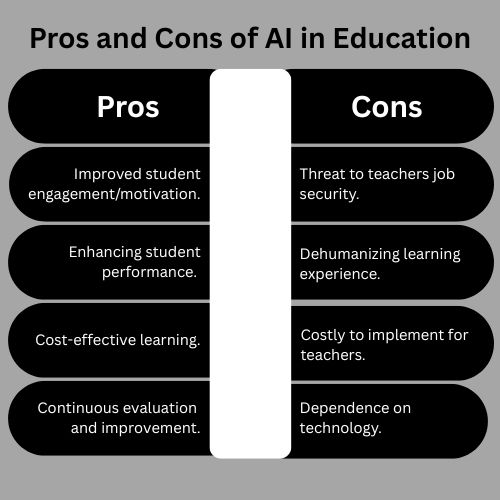
AI has taken over the world in the past few years, sparking dislike of it in the education world, with the latent ability it gives students to cheat. Some have a positive opinion of AI, like Sal Khan, founder of Khan Academy, who said, “By harnessing AI, every student can have access to a personalized tutor in every subject.”
While this may be true for some students, AI has introduced a new problem that teachers and students alike are learning to navigate. Many students have relied on AI to the degree that they are now lacking in critical thinking skills, among other issues that have become apparent through AI, like the spread of misinformation and lack of accountability.
And it’s not just students; teachers have also been challenged by how to use AI in a healthy and positive way.
“I use AI to get an overview and look into sources,” said Upper School science teacher Dr. Andrew Ying. “I am concerned about the students becoming overly reliant on it, of not being able to function without it. Other than that, I think it is an amazing resource.”
AI has become one of the most prominent and powerful resources in the world over the past few years, since personal assistants powered by AI have become more common. But an important question that needs to be answered is what AI is. AI can simply be defined as a simulation of a human, typically a replica of human intelligence, used to help humans with different tasks like problem-solving or researching.
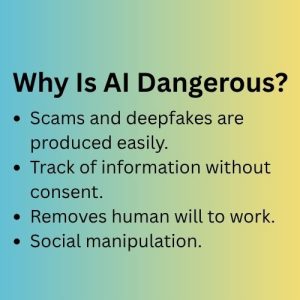
AI also has threats that are tied to it. People are less likely to trust what they see online if they have to consistently check if it is AI, and many AI businesses store information of their users without them knowing.
The sector most impacted by the creation of AI is education. AI has become a resource for students and teachers alike. While there is a positive side to AI, the negative impact of it has become obvious through new rules and guidelines enacted in most schools.
AI being released to the general public has raised the question for many outside of the world of education: What are students saying about using AI for schoolwork? A couple of Hackley students were willing to comment.
“I don’t use AI outside of asking it the same questions I would ask a teacher. It is usually very helpful because I have unlimited access to it, whereas with a teacher I need to schedule a meeting,” said a Hackley Upper School student who didn’t want their name included.
Many students use AI as a mock or stand-in teacher, using AI as a resource to ask questions in any setting or at any time. In this way, the use of AI is very diverse; it can be used for almost anything, from finding resources for an essay or research paper to explaining postulates for a math class.
Teachers have also found AI helpful, and have been learning the balance between it being helpful and harmful, just like students.
“Students who use AI can circumvent the purpose of the assignment, and the students aren’t learning to their full potential,” said Dr. Ying.
This seems to be the area where the usage of AI becomes hazy, creating a sort of grey area between using AI as a helpful resource and using AI to cheat and avoid responsibilities. With AI being so new, many students are unfamiliar with the repercussions it can have on them, besides punishment from the school.
Using AI to get a direct answer, in any field, can impact the way a student learns the material. A big part of homework is repetition and using class notes and resources used in class to figure out answers to a question alone. Teachers are typically used as a last resort resource when a student cannot figure out the answer by themselves.
But AI is often used as a stand-in teacher. While this resource can be helpful, it also reduces the amount of time and effort that students put into assignments they find challenging; instead, they immediately turn to AI to help them figure out a complex problem. The difference between in-person and online teachers can be huge, but as programmers and students alike have been figuring out issues, the transition has slowly gotten better.
“I don’t use AI to cheat or anything, but I do use it just to ask questions. It is easier than using other search platforms, like Google or Safari,” said a Hackley Upper School student who wanted their name withheld due to the potential stigma associated with using AI.
This can lead to a dangerous spiral where students use AI more and more frequently, eventually abusing its original purpose.
“The downfall is that students can use AI to cheat,” said Dr. Ying.
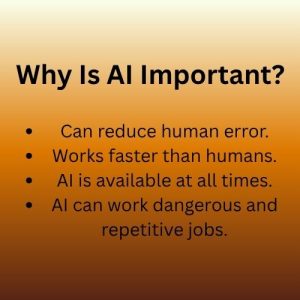
AI can be helpful for humans who want to do specific tasks but don’t know how, who want information in a way that is easily and understandable, and it can also integrate into the workforce.
All the uses of AI can be abused to the point of academic dishonesty or cheating. The definition of cheating is using AI to avoid the purpose of an assignment, or using AI to the point where the majority of the assignment is not done by the student themselves.
Many schools have tried to create ways of preventing the use of AI in schools. Hackley, for example, has had students install Lockdown Browser. Lockdown Browser, which so far has been used in History, English, and AP Science and Math classes, prevents the use of other tabs while students are working on a writing assignment, blocking the use of AI on a computer while the student is working on an assignment.
While Lockdown Browser has so far been a great resource for teachers who want to limit the usage of AI in their classrooms, it can’t fully prevent the usage of AI when students are at home or doing homework outside of school.
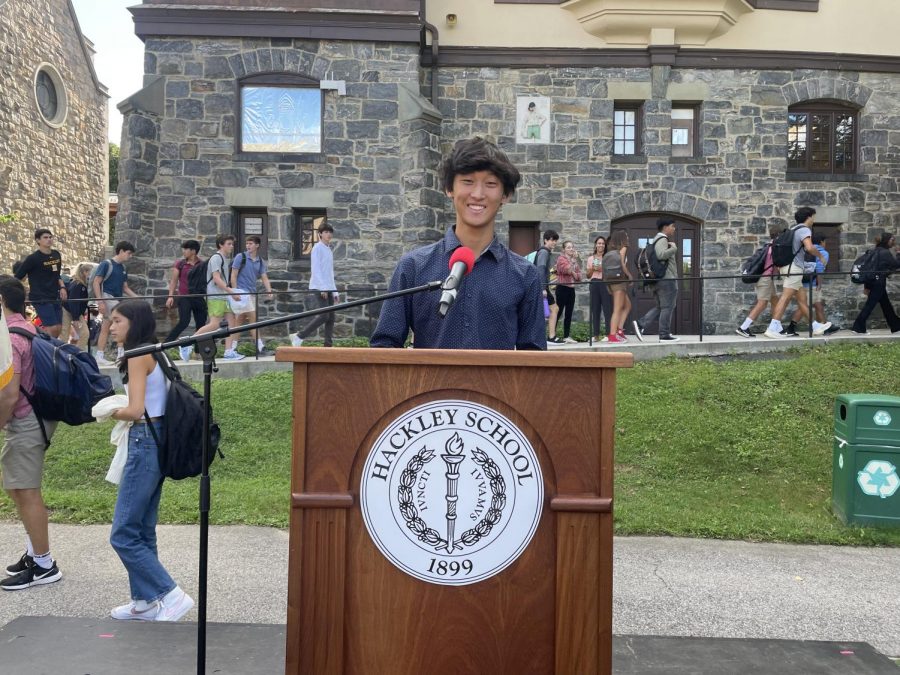
“I think that Lockdown Browser is great for in-class work like comps and tests.I don’t think it works well for homework, especially with high school students who have easy access to other forms of technology,” said Franklin Truong, a 10th grader at Hackley.
AI is still relatively new and expanding at a fast rate. Its potential uses are still undefined, and the impact it can have on students and the way they learn is still unknown. At the moment, schools continue to adjust to AI to the best of their ability, and students figure out the balance between using AI as a helpful tool and using it to cheat.