






































Karina Melendez is one of the many Children’s Aid Society success stories. While Ms. Melendez was in foster care with Children’s Aid, she evolved from harboring a sense of defeat to pursuing her master’s at New York University. She said that oftentimes, it is not just money that provides a lifeline to people; it is human connection and support.
But Children’s Aid Society, a non-profit organization that serves impoverished children and families in New York City, has been devastated by the reduction of federal funds, leading to a greater need for donations.
One way that the organization gains donors is through communicating the impact that Children’s Aid has on our neighboring communities. This is achieved by sharing stories of individuals involved with the organization.
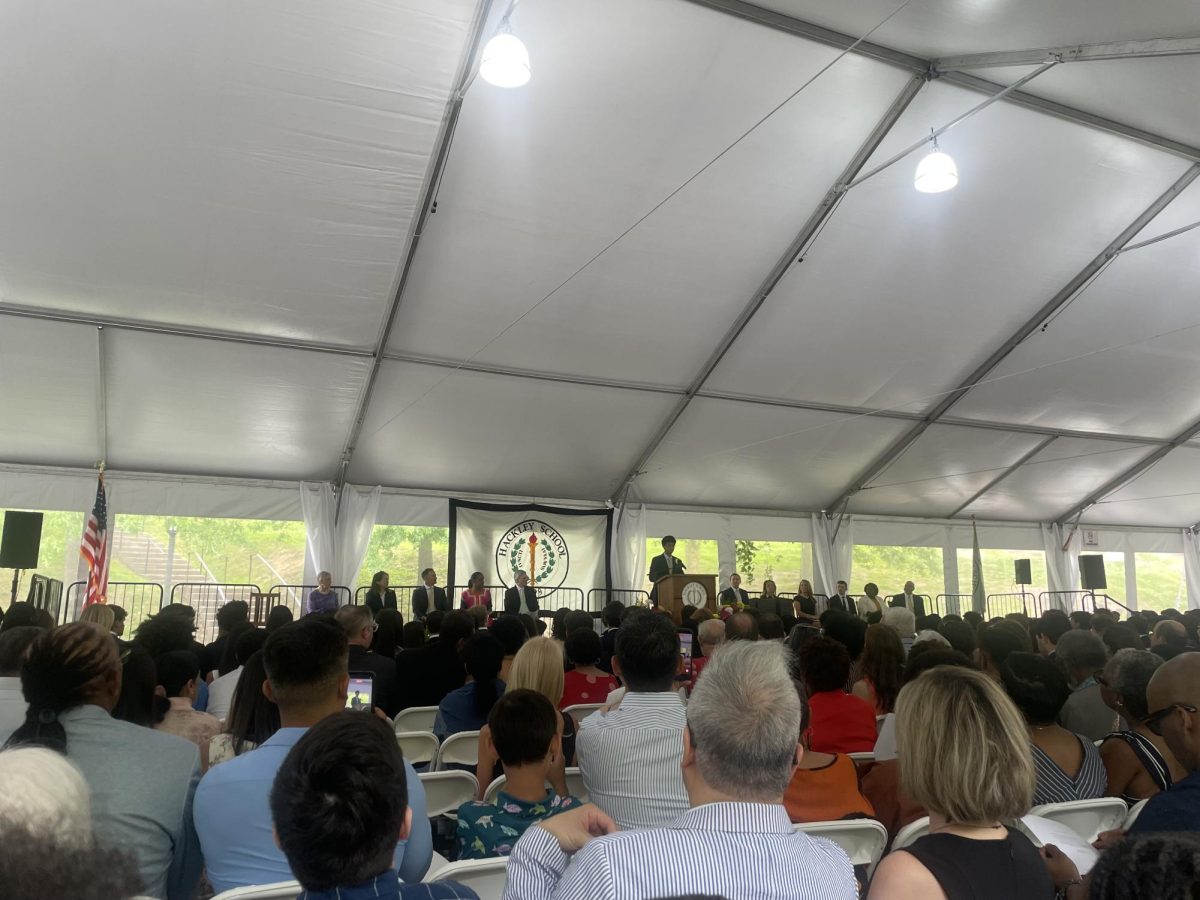
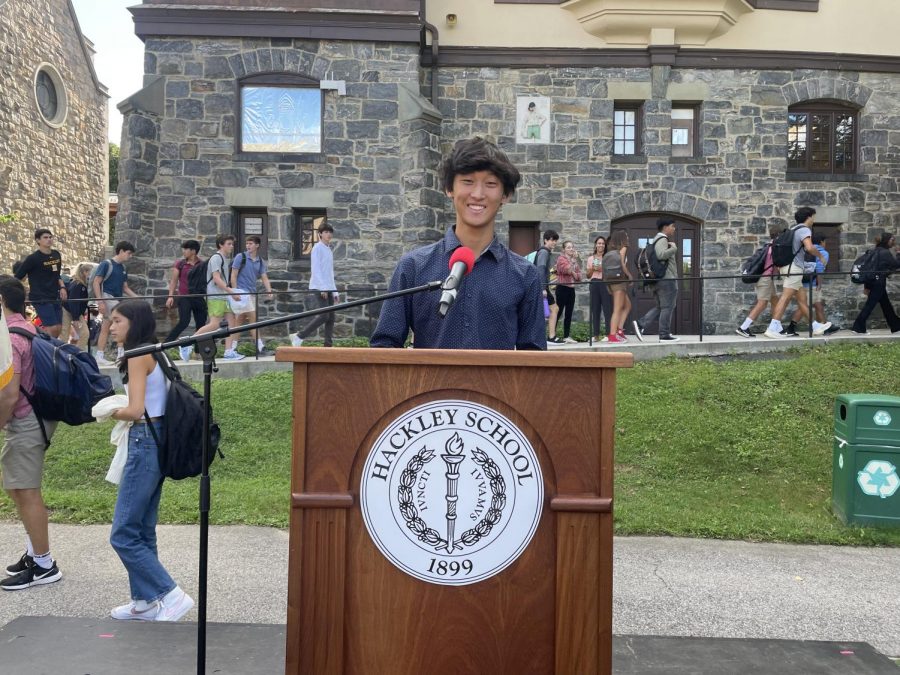
At Hackley, Emily DeMarchena, Director of Community Engagement and Service Learning, emphasizes the effectiveness of sharing stories.
“How do you get people to care about an issue that is so disconnected from their lives? It’s just contact. It’s stories, real stories, from boots on the ground,” Ms. DeMarchena said.
The experience of Ms. Melendez, who found strength and family through foster care at Children’s Aid, is just one of these incredible stories. But families finding prosperity through this organization is not just a modern accomplishment; it started almost 200 years ago.
From its founding in 1853 to the 1920s, Children’s Aid helped an estimated 30,000 children living on the streets of New York City by developing the Orphan Train Movement.
The Orphan Train Movement helped relocate orphaned, abandoned, or homeless children from New York City into the care of families living in rural areas. The goal was to offer children increased possibilities to lead fulfilled lives. This is similar to the modern mission of Children’s Aid.
“Children’s Aid was founded a long time ago by New Yorkers who saw homeless children living in the streets of New York and wanted to do better by them,” Anthony Ramos, Vice President of marketing and communications at Children’s Aid said, “That has evolved over time into who we are today, an anti-poverty organization that works in New York City’s most under-resourced communities, to give children the opportunity to reach their full potential.”
The organization helps individuals thrive by relieving them of challenges they might encounter.
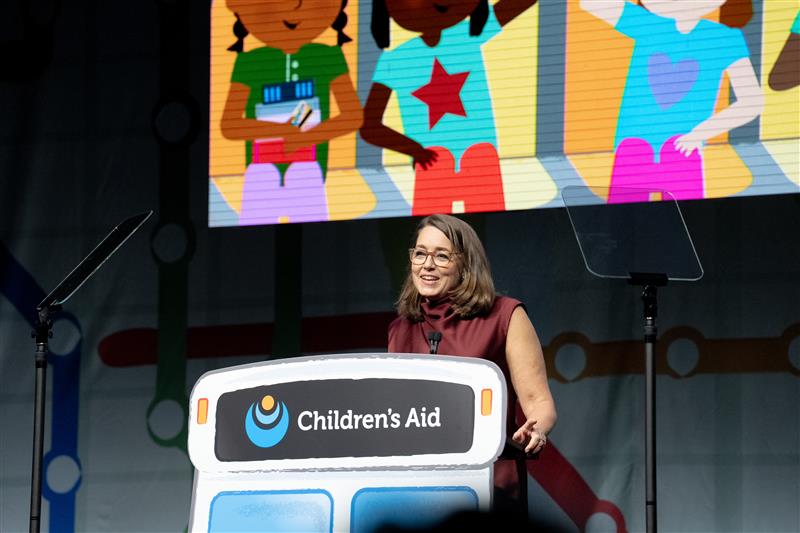
“Kids in poverty have a lot stacked against them; we help them be successful and independent adults by taking various barriers away from them,” said Phoebe Boyer, President and CEO of Children’s Aid.
The three focuses of Children’s Aid are access to academic and social-emotional learning, nutrition and healthcare, and family care.
The last issue, family care, includes making sure children have a stable family, a more complicated one to solve. Children’s Aid works with “foster parents and birth parents and aunts and uncles and grandparents,” said Ms. Boyer, understanding the need for children to have families.
Ms. Melendez recognizes this necessity more than most. She was in foster care from 15 to 21 years old, staying with a family during college to ensure she had a place to go during school breaks.
As a teenager, Ms. Melendez escaped her personal situation by diving into her schoolwork, describing herself as a “teacher’s pet.” She got into Columbia on a full-ride scholarship, excited to continue her passion for learning.
Freshman year at Columbia was not the getaway she imagined. School became her reason for running away. At the end of her freshman year of college, Ms. Melendez disappeared. She vanished to upstate New York, completely cutting off all contact. Children’s Aid did not stop trying to reach out, even if she did.
“My case manager, Kara, took trains to come see me every month and make sure I was okay and check in on me. And my mentor, Eva, was trying to get in contact with me for a whole year,” said Ms. Melendez.
She was scared that her support system at Children’s Aid would be upset with her for running away. To her surprise, when she finally talked to her case manager and mentor, she was met with love and understanding.
“I called her, and she said, sweetie, come home, we miss you. Where are you? We really want to see you,” said Ms. Melendez.
After she was resettled at Columbia University, support was ceaseless. Children’s Aid helped her secure her first apartment, continued to support her in therapy, and became her family.
“I think one of the most important takeaways from my experience is the connections to people who continue to check in on me and who have become a larger network of support,” said Ms. Melendez.
The need for community runs through everyone who works at or uses the services of Children’s Aid.
“No one person can run this organization, because the social worker needs a supervisor who needs somebody in the finance department to get the money. It really is a massive team effort,” said Ms. Boyer, also emphasizing that they are all connected by a shared mission.
Having a big team and close connections allows for more hidden concerns to be revealed.
“It’s our young people in college who now are the ones that are the most powerful advocates about what they need,” said Ms. Boyer.
Ms. Melendez experienced firsthand the result of this advocacy. College students who were helped by the programs urged Children’s Aid to continue support for foster children throughout college. Children’s Aid began to help fund their textbooks and keep them with a foster family to go to during school breaks.
“It is not about what Children’s Aid says, or what Phoebe says, or what a vice president says in our organization. It is about helping our kids and families share their own perspective,” said Ms. Boyer.
Ms. Melendez said that seeing the individual and not just their setbacks is one of the strongest ways you can support people who are struggling.
“It wasn’t money, it was being there for me if I needed advice, if I needed someone to talk to, but I never felt like she was talking down to me,” said Ms. Melendez, remembering the ways her mentor helped her.
Even Ms. Boyer, who observes all the programs at a bird’s eye view, can see how connections transform lives.
“We often see kids who have really been traumatized, and to watch our staff have relationships and help them heal is the best thing ever,” she said.
Mr. Ramos has also seen the direct impact this can have on a child’s life.
“Sometimes just a simple act can change the trajectory of a child’s life. There are thousands of stories where that happens,” said Mr. Ramos.
Along with helping individuals, Children’s Aid is dedicated to sharing the narrative of under-resourced children in New York City. One way they do this is by interviewing Children’s Aid employees and past program users on their podcast, titled Every Step of the Way: Conversations that Inspire. There are various articles written about events, people, and milestones.
“Amplification of our messaging, following us, and sharing our stories. That helps build more awareness, and that in turn brings more donors for the organization,” said Mr. Ramos.
Sharing a story, reading an article, listening to a podcast, or sending an email could change the trajectory of an entire life. Children’s Aid constantly proves that one voice has the ability to change others’ stories.